A classroom robot has to do more than move, talk, or answer a question. It has to help a teacher reach a clear lesson goal without adding setup work, safety risk, or another screen to manage.
Educational robots will earn their place through useful tasks and clear results. For a school leader, the real question is plain: what can the robot do during a lesson that a laptop, tablet, or teacher cannot do as well?
Quick read
- Start with the lesson task, then choose the robot.
- Ask for proof that pupils learn more, practise longer, or get better feedback.
- Check data storage, repair needs, and teacher workload before buying.
The robot needs a clear classroom job
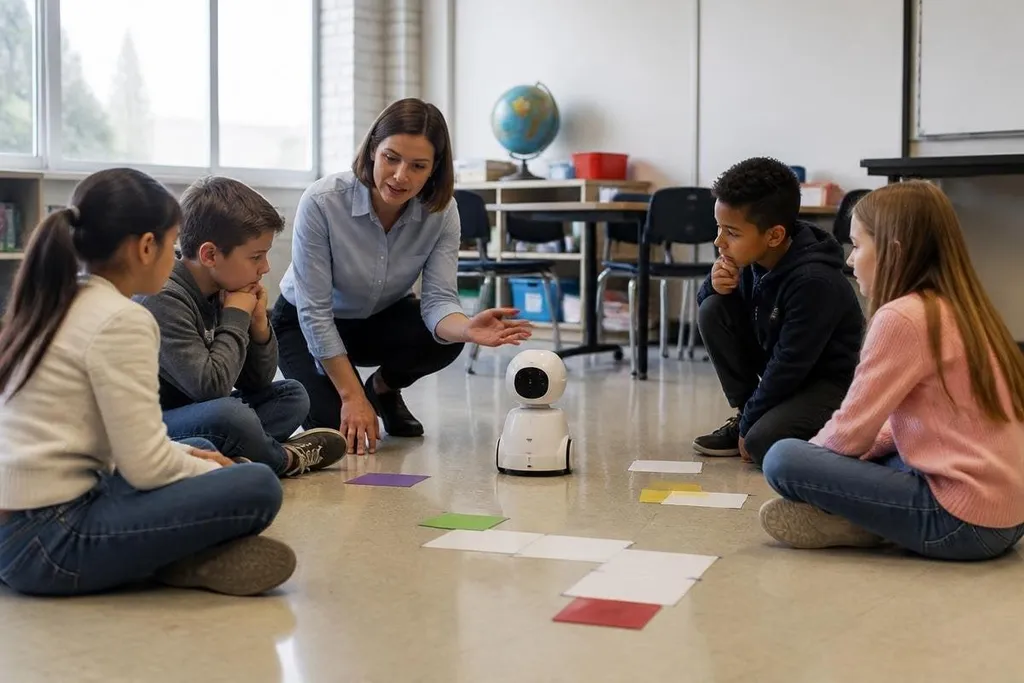
Educational robots can take several forms. A small mobile robot may help children practise code. A robot arm may show motion, force, or control. A social robot may lead a speaking exercise or guide a pupil through repeated practice.
Those jobs need different hardware and different measures of success. A coding robot can be judged by how easily pupils write and fix programs. A language robot needs clear speech, steady turn-taking, and a way for the teacher to correct wrong answers.
A robot that does many things can still have no useful role. The buyer should name one lesson task first, then check whether the machine handles that task with fewer steps than the current method.
Better teaching tools will show their work
Classroom robots should give teachers useful records, not a pile of activity logs. A teacher may need to see which pupils completed a task, where they made repeated errors, and which exercise came next.
That record should stay tied to the lesson. A dashboard that reports movement, speech, or button presses has little value if it cannot help a teacher change the next activity. The robot needs to show what happened in plain language.
A school buyer needs the lesson record: which robot ran it, what pupils did, and how the teacher measured the result. Reporting at Robot24 can show those details beside claims about the hardware and software. The next check is clear: what data does the lesson send away from the classroom?
The data rules matter just as much. Schools should ask where recordings go, how long they remain there, who can view them, and whether the robot can run without sending pupil data to a remote server.
Physical design will decide daily use
A classroom robot lives among bags, desks, cables, and moving children. Its shape, speed, noise, battery life, and stop controls affect every lesson, even when the sales material focuses on its software.
A robot that needs a clear floor may work well in a lab and poorly in a crowded classroom. A robot that needs charging during each session may leave the teacher with a stalled activity and a room full of pupils waiting.
Teachers also need access to basic controls. They should be able to stop motion, lower the volume, restart a task, and change the activity without calling a technician.
Repairs matter too. A school needs a clear answer for broken wheels, damaged cables, failed batteries, and software updates.
The strongest design may look plain. A clear status light and a reachable stop button can matter more than a face on the screen.
What schools should ask before a purchase
The machine should pass a short check before it reaches a classroom:
- Name the lesson: write the pupil task and the teacher action the robot will handle.
- Watch one full session: include setup, mistakes, correction, charging, and pack-away.
- Check the data path: record what the robot stores, where it sends data, and who controls access.
- Test the teacher controls: stop the robot, change the activity, and recover from a failed task.
- Price the whole year: include training, repairs, software fees, replacement parts, and staff time.
I'd skip any robot that needs a polished demonstration to explain its classroom use. A school needs repeatable work, clear controls, and evidence that the task helps pupils learn.
The next purchase should begin with a lesson plan and a test period, not a robot catalogue. If the machine cannot show a useful result during ordinary classroom work, its shape and voice do not justify the cost.